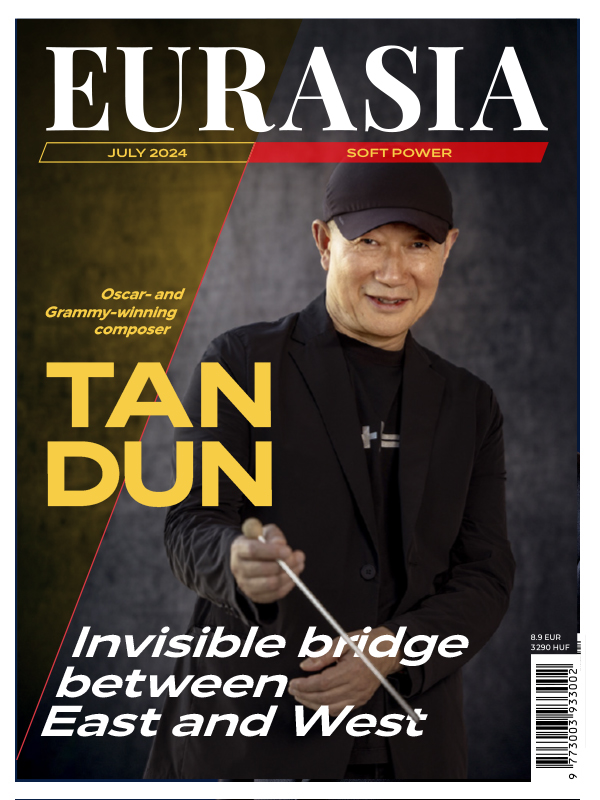
Eurázsia Szemle
Eurázsia Szemle is the principal outlet for scholarly articles on Eurasia in Hungary, embracing a wide range of academic disciplines in the humanities, social sciences, and economics. Accredited by the Hungarian Academy of Sciences and edited at John von Neumann University’s Eurasia Center, the journal covers all aspects of Eurasia Studies, from emphasis on theory formulation to empirical research. As a peer-reviewed, multidisciplinary journal, it publishes original research findings, critical literature reviews, case studies, commentaries, and book reviews.
The strategic latitude of every state actor within the contemporary international system—as well as their ability to assert and safeguard their interests—is fundamentally shaped by the extent and quality of their adaptation to three key and increasingly rapid Eurasian trends. The first of these is the growing tension between economic integration and security fragmentation. The second is the rising visibility, acceptance, membership, and influence of pan-(Eur)Asian ideas, agreements, and institutions—developments that are less influenced by external powers. The third—and arguably most significant trend at the level of national strategic planning—is the renewed interconnection of Eurasia’s various subregions into a more integrated strategic and economic space. In light of these dynamics, the Eurasia Center places particular emphasis on recent research findings related to developments within the Eurasian region and provides a forum for their dissemination through Eurázsia Szemle.
Impressum
ISSN 2939-5445 (Print)
ISSN 2786-409X (Online)
Published by John von Neumann University’s Eurasia Center
Publisher’s headquarter: 1117 Budapest, Hungary, Infopark sétány 1I.
Eurasia Center Homepage: https://eurasiacenter.hu/en/home_page/
Editor-in-Chief: Péter Szatmári, PhD
Deputy Editors-in-Chief: Professor László Csicsmann, PhD, Levente Horváth, PhD, Csaba Moldicz, PhD, Gergely Salát, PhD habil., Professor László Vasa, PhD

Eurasia magazine
The launch of Eurasia magazine has been inspired by a transformation of historic proportions: at the dawn of the 21st century, we are witnessing the emergence of a new world order in which the center of gravity of the global economy is steadily shifting toward Asia. Parallel to this, Eurasia—the vast region that bridges continents and has shaped civilizations—is once again coming to the forefront of global attention. Its strategic importance stems not only from its geographical expanse but also from its unique role as a crossroads of economies, politics, and cultures. It mediates between East and West, past and future. This dynamic transformation has inspired the creation of the platform the magazine seeks to embody: a forum for articulating key developments, uncovering deeper interconnections, and reimagining Eurasia’s evolving place in the global order.